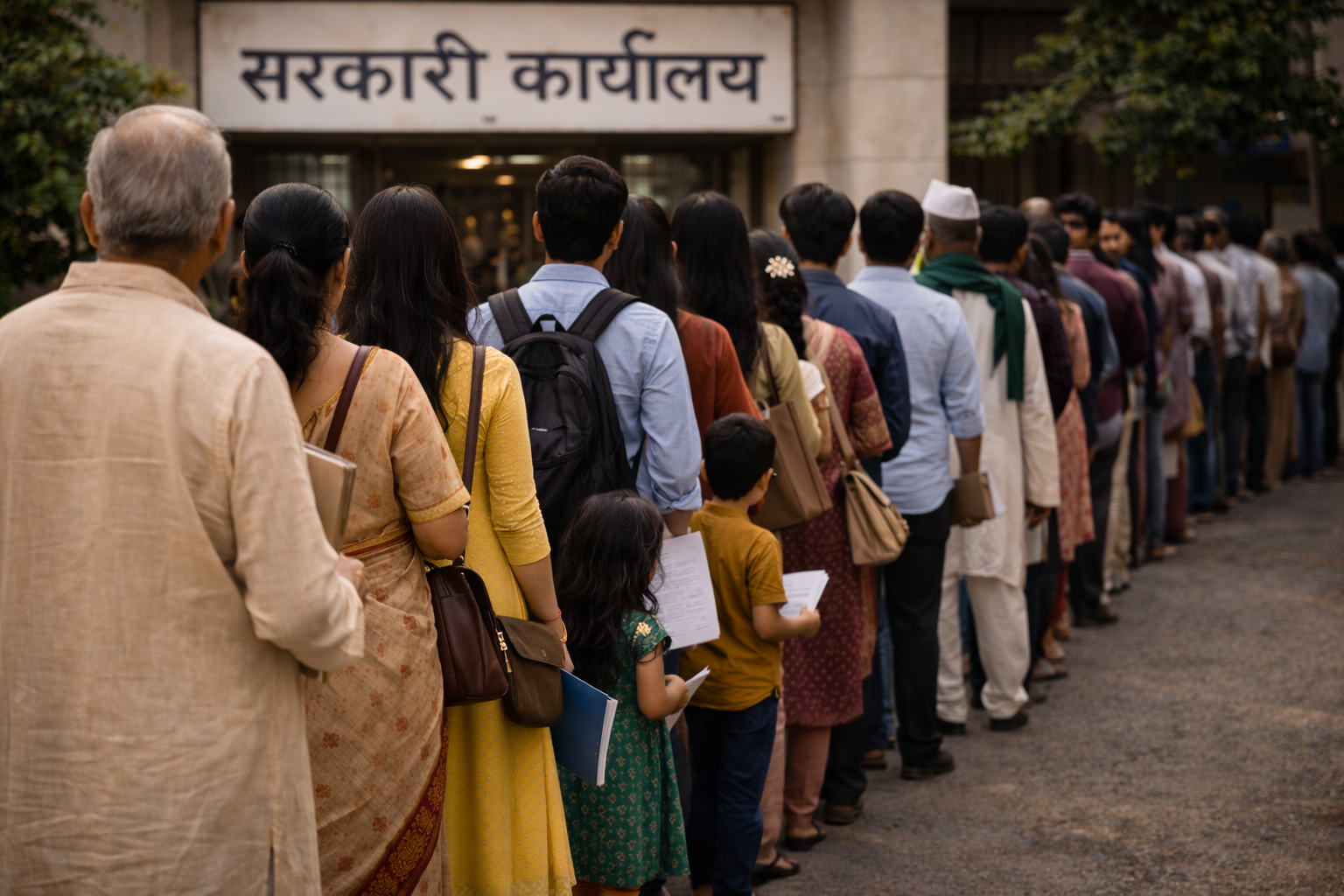




The Quiet Shift from Joint Families to Urban Loneliness
There was a time when Indian homes were never silent.
Mornings began with the clang of steel tumblers, the scent of filter coffee or fresh rotis, and the overlapping rhythms of many lives lived under one roof. Grandparents narrated stories that smelled of history, cousins fought and forgave before lunchtime, and wisdom wasn’t Googled, it was inherited. The joint family wasn’t merely a living arrangement; it was an ecosystem of belonging.
Today, that ecosystem is quietly disappearing.
Not with protests or proclamations, but with packed suitcases, new city pin codes, and the promise of “better opportunities.” What we are witnessing is not just the fragmentation of homes but the slow erosion of a cultural spine that once held Indian society upright.
Urban India celebrates independence. Nuclear families are hailed as efficient, modern, and progressive. Yet behind the glass windows of high-rise apartments lies a truth we rarely confront: loneliness has replaced togetherness, and convenience has replaced connection.
In joint families, no one ever truly aged alone. There was always someone to notice a fading appetite, a quiet sadness, or a need unspoken. Children grew up with emotional abundance, multiple caregivers, varied perspectives, and a strong sense of identity rooted in family lore. Conflict existed, yes but so did resolution, patience, and collective responsibility. The shift away from this structure has come at a cost we are only beginning to understand.
Elderly parents now live miles away from their children, waiting for weekly video calls to substitute daily presence. Young professionals return to empty homes after crowded workdays, scrolling endlessly in search of connection. Children grow up with schedules instead of stories, screens instead of shared meals. The house is quieter but the mind is louder.
This transition mirrors a global phenomenon, yet it is uniquely poignant in India, where family was never just private life, it was social infrastructure. The joint family absorbed emotional shocks, shared financial burdens, and passed down culture organically. Without it, individuals are left to navigate life’s pressures alone, often ill-equipped for emotional resilience.
Progress, however, need not mean erasure.
The death of the joint family should not signal the death of its values. As India speaks to the world, there is an opportunity to redefine modern living where ambition coexists with anchoring, and mobility does not come at the cost of meaning. Togetherness doesn’t demand shared roofs, it demands shared intent.
Perhaps the future lies not in returning to old homes, but in reviving old sensibilities, intentional connection, intergenerational dialogue, and emotional accountability.
Because a society that forgets how to live together may succeed economically, but it will always feel culturally incomplete.
And silence, no matter how modern the home, was never meant to be the loudest sound in an Indian household.
Tagged with :