


Worn at Home, Studied Abroad: The Journey of Indian Craft
In Indian homes, craft was never a trend, it was tradition.
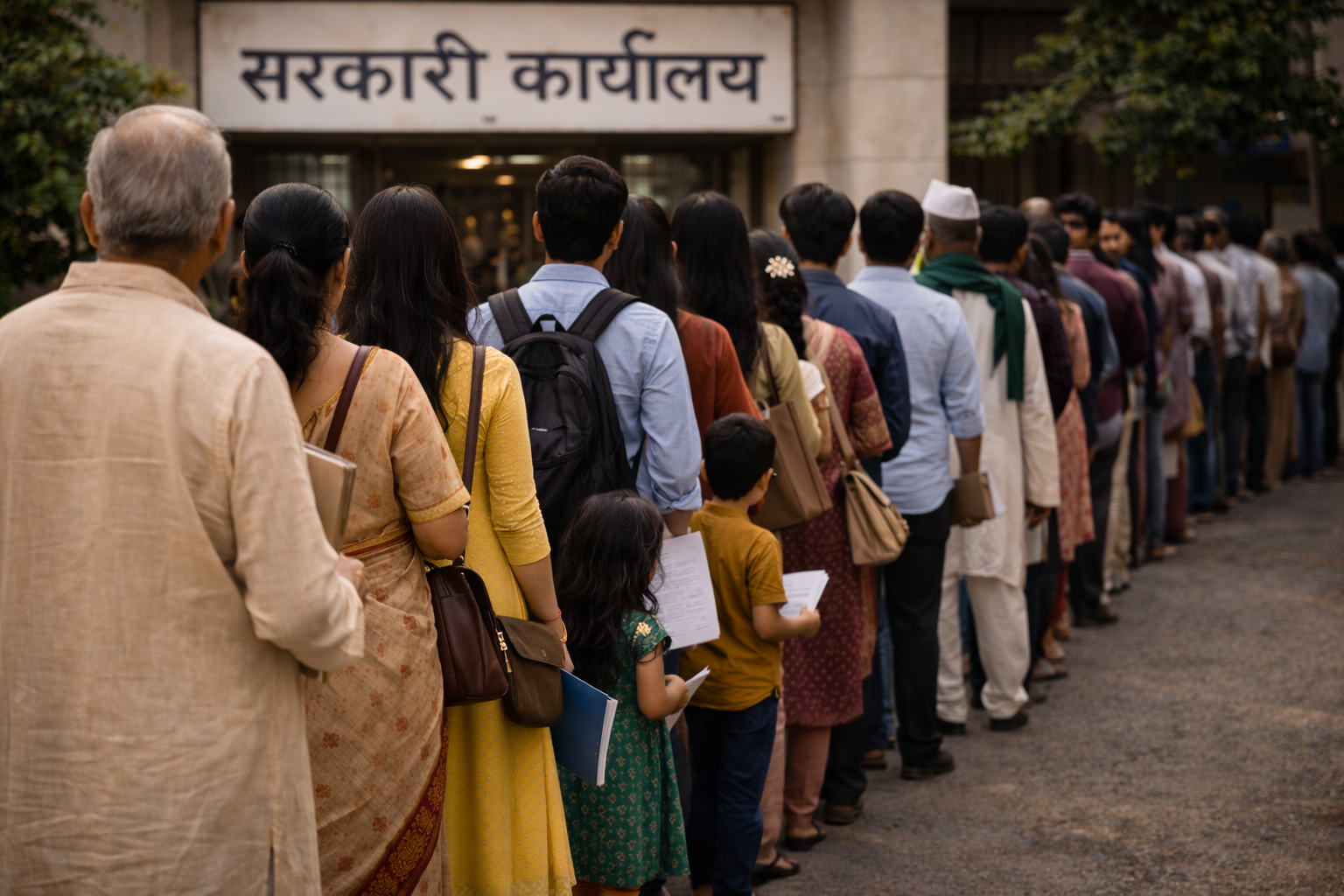
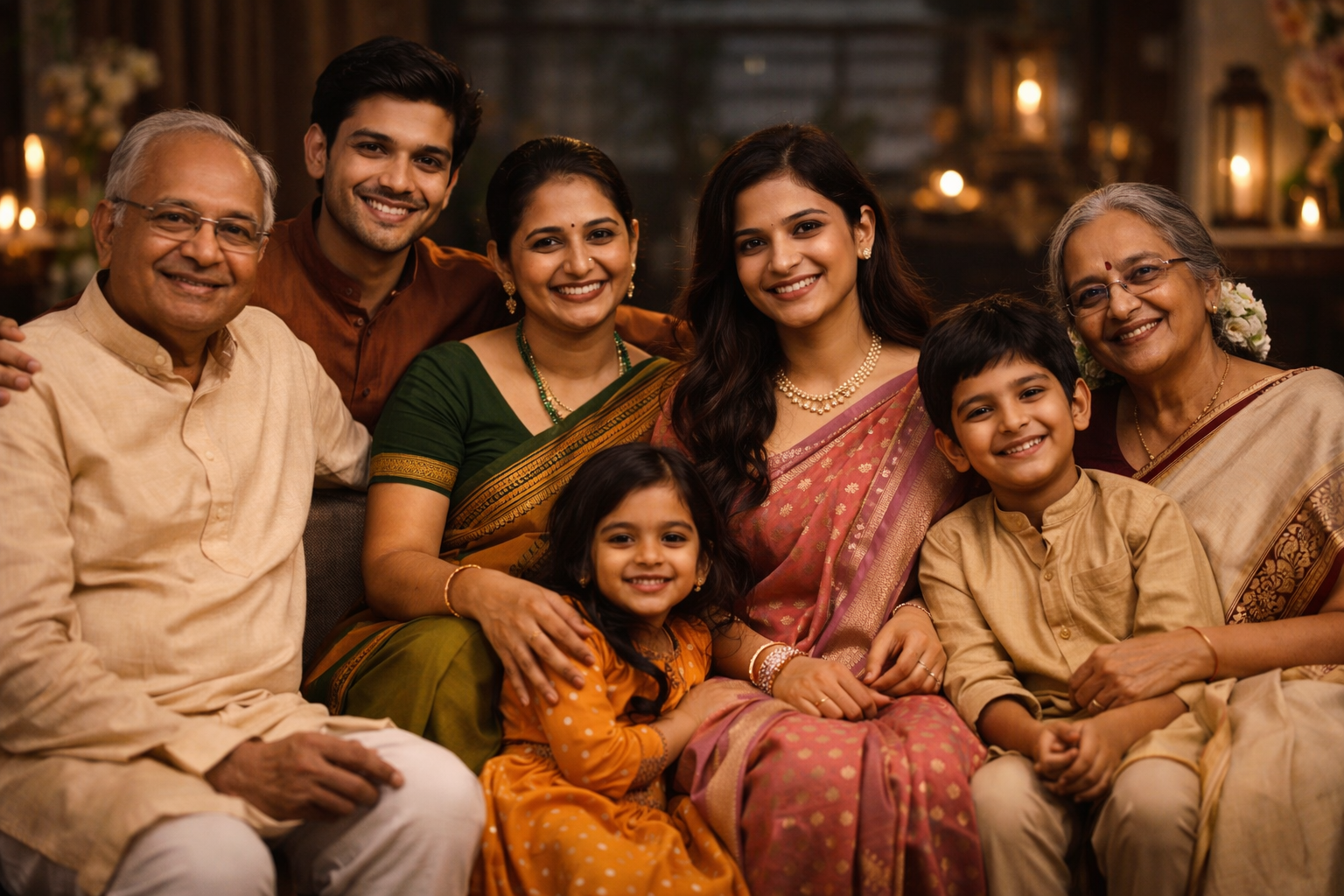
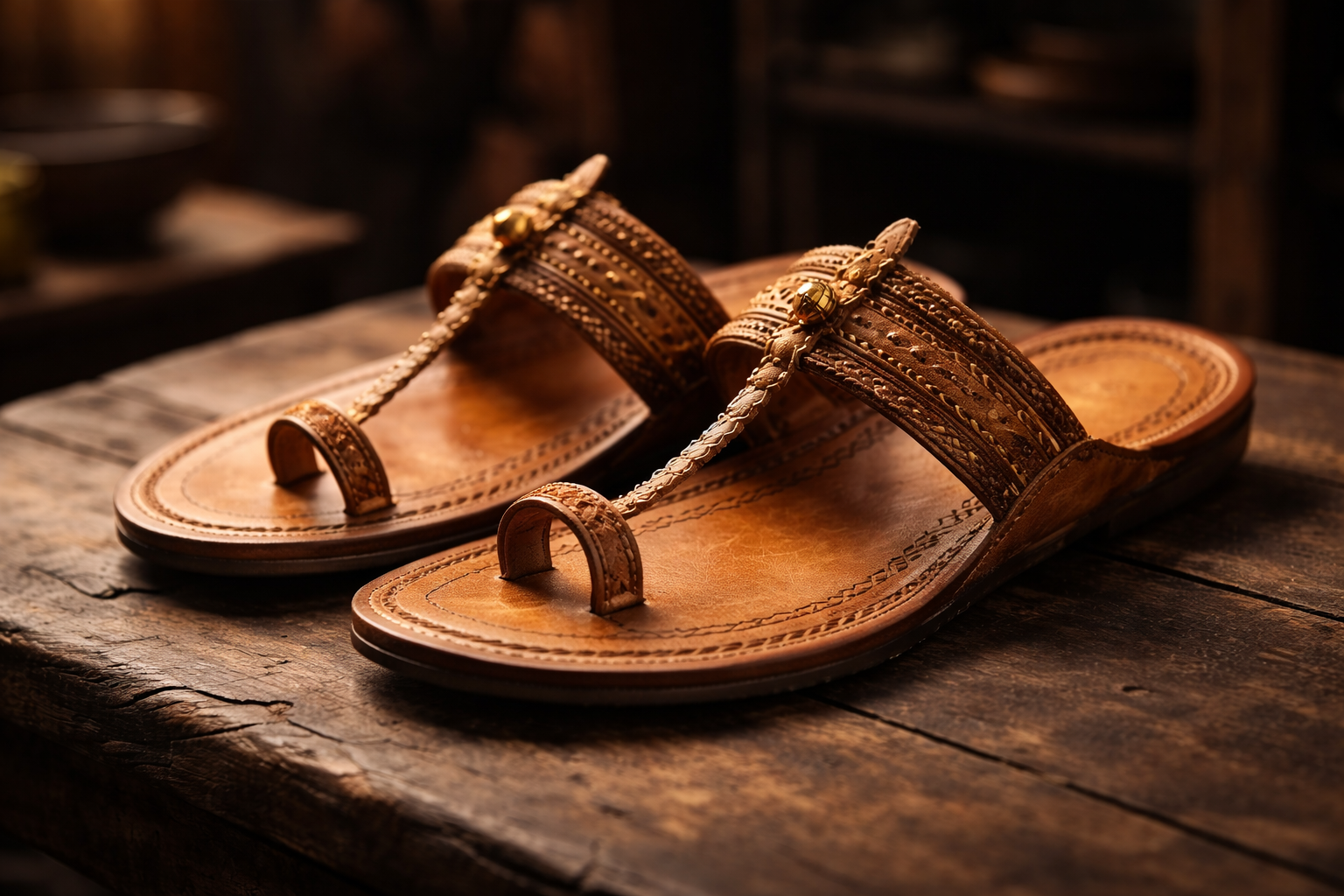
Long before global runways discovered “handcrafted elegance,” Indian artisans were shaping leather, weaving silk, dyeing fabric, and carving stories into everyday objects. Kolhapuri chappals lay by the doorway, worn without ceremony. Banarasi silks were folded carefully in wooden trunks, brought out only for moments that mattered. These creations were not branded. They were lived in.
And yet today, these very crafts are dissected in design schools abroad, referenced in luxury collections, and applauded on global fashion weeks,often with unfamiliar names attached to them.
This is the paradox of Indian craft.
What was once considered ordinary at home is now extraordinary on international platforms. Kolhapuri-inspired footwear walks European runways. Ikat patterns resurface in Parisian silhouettes. Block prints appear in luxury resorts under the label of “bohemian chic.” Indian craftsmanship has crossed borders,not as imitation, but as influence.
For centuries, Indian artisans mastered techniques passed down through generations, not textbooks. Knowledge was inherited, not documented. Every stitch carried geography. Every motif carried memory. Craft was not created for applause,it was created for purpose, for community, for continuity.
The world, however, has begun to study what India has long practiced.
Design institutes in Milan, London, and New York now analyse Indian textiles for their sustainability, geometry, and philosophy. Slow fashion, a concept the West now reveres, was always the Indian way. Natural dyes, zero-waste patterns, and human-scale production were not conscious movements here, they were instinct.
Yet, while global luxury houses borrow generously, the original makers often remain invisible.
The journey from Kolhapur to Gucci or Prada is not merely about aesthetics, it is about authorship. It raises an uncomfortable question: when craft travels, who gets the credit? The artisan or the interpreter? The village or the label?
And still, this is not a story of loss, it is a story of potential reclamation.
India today stands at a cultural crossroads. With digital platforms, podcasts, and intellectual property narratives, Indian craft no longer needs translation, it needs amplification. The artisan does not need validation from Europe, Europe is already listening. What is required now is ownership of the story.
Culture Calls exists in this very space, where heritage meets global conversation. Where craft is not romanticised, but respected. Where Indian narratives are not exported as trends, but presented as thought leadership.
Because when Indian craft walks the world stage, it should not whisper its origins, it should announce them.
From the quiet lanes of Kolhapur to the polished floors of luxury fashion houses, the journey of Indian craft is not about arrival. It is about recognition. India does not need to become global.
The world is already wearing India.
Tagged with :